
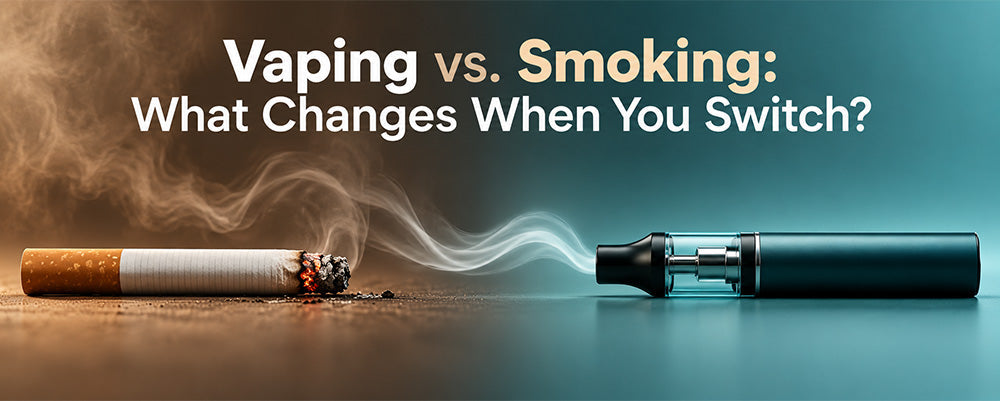
If you are a long-time cigarette smoker considering an alternative, the decision to move away from combustible tobacco can be an important lifestyle change.
Smoking can become deeply ingrained in daily routines. It may mark the start of your morning with coffee, punctuate stressful workdays, and serve as a familiar social habit. But cigarette smoking also exposes the body to thousands of chemicals produced by burning tobacco, including carbon monoxide and many toxic substances.
For adults who are considering switching completely away from cigarettes, vaping can feel unfamiliar and raise plenty of questions. What does the change actually feel like day to day? What changes when you stop inhaling cigarette smoke? And what should you realistically expect during the transition?
Here is a straightforward look at vaping vs smoking, the key differences between combustible tobacco and vaping, and some of the changes you may notice when you stop smoking cigarettes.
Combustion vs. Aerosol: The Core Difference
The foundational difference between smoking and vaping comes down to one key word: combustion.
A traditional cigarette burns tobacco and produces smoke containing thousands of chemicals. Cigarette smoke includes carbon monoxide, benzene, formaldehyde, and many other harmful substances. Tobacco smoke also contains tar, a collection of particles produced during combustion.
Vaping does not burn tobacco. An electronic cigarette uses a battery-powered heating element to heat an e-liquid containing ingredients such as Vegetable Glycerin (VG), Propylene Glycol (PG), flavorings, and, depending on the product, nicotine. The result is an aerosol rather than combustible tobacco smoke.
| Element | Combustible Tobacco Smoking | Electronic Vaporizer (Vaping) |
|---|---|---|
| Mechanism | Tobacco is burned to produce smoke | E-liquid is heated to produce an aerosol |
| Inhaled Material | Tobacco smoke containing gases and fine particles | Aerosol containing liquid droplets and other compounds |
| Chemical Exposure | Thousands of chemicals, including many toxic and carcinogenic substances | Generally fewer and lower levels of many harmful chemicals than cigarette smoke, but not risk-free |
| Tar & Carbon Monoxide | Produces tobacco tar and carbon monoxide | Does not involve tobacco combustion, so it does not produce tobacco tar or the same combustion-related carbon monoxide exposure |
| Odor | Smoke can persist on clothing, hair, furniture, and other surfaces | Aerosol odor generally dissipates more quickly than cigarette smoke |
Because vaping does not involve burning tobacco, switching completely away from cigarettes can substantially reduce exposure to many harmful chemicals found in combustible tobacco smoke. However, vaping is not risk-free, and the long-term health effects of vaping continue to be studied.
What Changes After You Stop Smoking?
When you stop smoking cigarettes, your exposure to cigarette smoke and carbon monoxide from combustion stops. Some health benefits of quitting smoking begin relatively quickly, although the timing and extent of recovery vary from person to person.
Importantly, these changes are associated primarily with stopping combustible tobacco, not with vaping itself.
| Timeline | What Can Change After Quitting Smoking | What You May Notice |
|---|---|---|
| First hours to days | Carbon monoxide levels in the body begin falling after smoking stops | Breathing and energy may gradually feel different |
| First days to weeks | Withdrawal symptoms may appear as the body adjusts to lower nicotine exposure | Cravings, irritability, restlessness, or changes in cough may occur |
| Weeks to months | Lung function and circulation can begin improving after quitting | Physical activity may become easier for some people |
| Months to years | Risks associated with smoking continue to decline over time | Long-term health benefits accumulate |
1. Carbon Monoxide Levels Begin to Fall
Cigarette smoke contains carbon monoxide, which reduces the blood's ability to carry oxygen efficiently.
After you stop smoking, carbon monoxide levels in the blood begin to fall relatively quickly. This is one of the early changes associated with quitting cigarettes.
The exact timing varies according to how much and how recently someone smoked, so it is better to think of this as an early recovery process rather than a guaranteed overnight transformation.
2. Your Cough May Change
Some people notice changes in coughing after they stop smoking. This does not necessarily mean that the lungs are "purging" cigarette tar.
The respiratory system can continue clearing mucus and irritants after smoking stops, and changes in coughing can occur as the airways adjust.
If you develop a persistent, severe, or unusual cough, seek medical advice rather than assuming it is simply part of quitting.
3. Taste and Smell May Improve
Smoking can affect the senses of taste and smell. After quitting, some people notice that food, drinks, and surrounding smells become more noticeable.
The timing varies considerably between individuals, so there is no universal two-week recovery point.
Daily Lifestyle Changes: What Shifts Right Away?
Less Lingering Smoke Odor
Cigarette smoke can cling to clothing, hair, furniture, and car interiors. Vaping aerosol generally dissipates more quickly, although it can still leave an odor or residue.
Less Exposure to Tobacco Tar
Because vaping does not burn tobacco, it does not produce tobacco tar. However, this does not mean vaping is harmless to the mouth or lungs.
No Burning Cigarette or Ash
Switching away from combustible cigarettes removes burning tobacco and ash from your routine. Vaping devices still require appropriate battery, charging, and storage precautions.
Different Daily Routine
You may no longer need cigarette packs, lighters, or ashtrays, although vaping introduces its own equipment, e-liquid, charging, and maintenance requirements.
Understanding the Difference in Nicotine Delivery
One practical hurdle for smokers transitioning away from cigarettes is adjusting to how nicotine feels.
Cigarettes deliver nicotine rapidly through inhaled tobacco smoke. The amount of nicotine absorbed from vaping can vary considerably depending on the device, e-liquid formulation, nicotine concentration, puff duration, and individual vaping behaviour.
| Inhalation Format | Nicotine Delivery | Typical Experience |
|---|---|---|
| Combustible Cigarette | Rapid nicotine delivery through inhaled tobacco smoke | Familiar throat sensation and rapid nicotine effect |
| Nicotine Salt Pod | Can deliver relatively high nicotine concentrations with a smoother throat sensation | Often used in compact pod-style devices |
| Freebase Nicotine Tank | Delivery varies according to nicotine strength, device power, airflow, and vaping style | Often produces a stronger throat sensation at higher concentrations |
If you switch from cigarettes to vaping, the experience may feel different even when the nicotine concentration appears similar.
Nicotine salts can provide a smoother throat sensation and are commonly used in pod-style products. Some adult smokers find this format easier to transition to, but nicotine delivery is not identical to cigarette smoking and varies between products. For more detail on nicotine levels, see How Much Nicotine Is Really in a Vape.
Nicotine Salts vs. Freebase: What May Feel Different?
Nicotine Salts
Often used in lower-power pod systems and available in higher nicotine strengths with a smoother throat sensation.
Freebase Nicotine
Commonly used in refillable tanks and lower nicotine strengths, with a more noticeable throat hit as strength increases.
The right format depends on the device, nicotine strength, and individual preferences. See Nic Salts vs E-Liquids for a broader comparison.
The Financial Picture: How Much Do You Actually Save?
The financial difference between smoking and vaping depends heavily on location, cigarette prices, vaping frequency, product type, and nicotine consumption.
For that reason, there is no universal amount that every smoker will save by switching.
A simple way to compare the two is to calculate your own monthly cigarette spending and compare it with your actual vaping expenses.
| Habit Model | Typical Cost Factors | Annual Cost | Potential Difference |
|---|---|---|---|
| 1-Pack-Per-Day Smoker | Cigarette price × number of packs purchased | Depends on local price | Use your actual cigarette spending |
| Disposable Vape User | Device price × number of devices used | Depends on usage | Compare with actual cigarette spending |
| Refillable Pod User | E-liquid, pods/coils, and replacement hardware | Depends on usage | Compare with actual cigarette spending |
A refillable pod system may have lower ongoing costs than cigarettes for some users, but the actual difference depends on how much e-liquid and how many replacement pods or coils you use. For e-liquid options, see Best E-Liquids of 2026.
4 Common Mistakes to Avoid When Switching
1. Continuing to Smoke Regularly
Switching between cigarettes and vaping does not eliminate exposure to harmful chemicals from combustible tobacco.
2. Choosing an Unsuitable Nicotine Strength
Nicotine needs vary between individuals and products. Follow product instructions and seek professional advice if unsure.
3. Using Hardware That Is Too Complicated
Many beginners prefer simpler pod-style systems because they generally require less maintenance.
4. Ignoring Dryness or Irritation
Hydration may help with ordinary dryness, but persistent irritation or concerning symptoms should not be ignored.
1. Continuing to Smoke Regularly: Switching between cigarettes and vaping does not eliminate your exposure to the harmful chemicals produced by combustible tobacco. If your goal is to stop smoking, moving completely away from cigarettes provides a greater reduction in exposure than continuing to smoke alongside vaping.
2. Choosing an Unsuitable Nicotine Strength: Nicotine needs vary between individuals and products. A nicotine strength that works for one smoker may not work for another. Follow the product's instructions and consider professional advice if you are unsure about nicotine use.
3. Using Hardware That Is Too Complicated: A complicated device can make the transition unnecessarily frustrating. Many beginners prefer simpler pod-style systems because they generally require less maintenance than advanced rebuildable or high-powered devices.
4. Ignoring Dryness or Irritation: Some people experience dry mouth or throat irritation when vaping. Staying hydrated may help with ordinary dryness, but persistent irritation or other concerning symptoms should not simply be ignored.
✓ Tips for a Complete Switch
- Keep the goal focused on moving completely away from combustible cigarettes rather than maintaining both habits indefinitely.
- Choose a device and nicotine format that you can use consistently and understand how to operate safely.
- Read the product instructions and follow recommended charging, storage, and e-liquid guidance.
- If you want to quit nicotine entirely, consider evidence-based cessation support from a healthcare professional.
⚠ Important Health Warning
- Vaping is not risk-free and should not be treated as harmless.
- Adults who do not smoke should not start vaping.
- Using both cigarettes and e-cigarettes does not provide the same potential benefit as switching completely away from combustible tobacco.
- If you experience concerning or persistent symptoms, seek medical advice rather than assuming they are caused by normal adjustment.
Making the Permanent Change
When evaluating vaping vs smoking, the most important distinction is that cigarette smoking involves combustible tobacco and produces smoke containing carbon monoxide, tar, and many harmful chemicals.
Switching completely away from combustible cigarettes can reduce exposure to many of the toxic chemicals produced by burning tobacco. However, vaping still exposes users to nicotine and other substances and is not risk-free.
If you are an adult smoker considering a switch, focus on completely moving away from combustible cigarettes rather than assuming that vaping is harmless. Choose products appropriate for your needs, follow manufacturer instructions, and avoid keeping both habits indefinitely.
If your goal is to quit nicotine entirely, evidence-based smoking-cessation support, including advice from a healthcare professional, can help you choose an appropriate approach.
Frequently Asked Questions
Is vaping safer than smoking cigarettes?
For adults who already smoke, completely switching from combustible cigarettes to vaping can reduce exposure to many harmful chemicals. Vaping is not risk-free.
What happens when you switch from smoking to vaping?
You stop inhaling cigarette smoke and combustion-related substances such as tar and carbon monoxide. Nicotine delivery and the daily routine can feel different.
Is it better to vape and smoke or only vape?
If an adult smoker chooses vaping as an alternative, completely replacing cigarettes is preferable to continuing both habits.
Does vaping contain tar?
Vaping does not involve burning tobacco and therefore does not produce tobacco tar in the same way cigarette combustion does.
Does vaping contain carbon monoxide?
Vaping does not involve tobacco combustion, so it does not produce the same combustion-related carbon monoxide exposure as cigarette smoking.
Can vaping help smokers quit cigarettes?
Some evidence suggests nicotine e-cigarettes can help some adults quit smoking, but they are not risk-free and are not an FDA-approved smoking-cessation medication in the United States.
Should non-smokers start vaping?
No. Vaping is not risk-free, and adults who do not use tobacco or nicotine products should not start vaping.
Looking for More Vape & Nicotine Guides?
Explore Puff Love's guides on nicotine, e-liquids and vaping.