
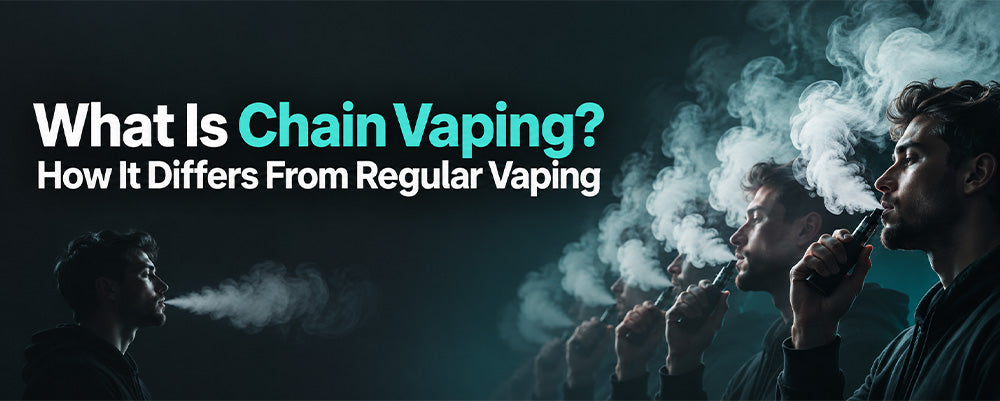
Quick Answer: Chain vaping means taking puffs on a vape one after another with only short breaks, often starting the next round before the effect of the last one fades. Regular vaping is usually spread out, with puffs tied to specific moments or cravings. The big difference is how much nicotine you take in over a short time and how much of your day the habit takes over.
This article is for adults 21 and older and is for general information, not medical advice.
Chain Vaping Meaning
Chain vaping borrows its name from chain smoking. It describes using a vape almost continuously, taking many puffs in a row or lighting up again the moment you put the device down. There is no official puff count that makes it "chain vaping." It's a description of a pattern: little gap between sessions, and the vape is in your hand for much of the day.
It is a behavior label, not a diagnosis. Someone can chain vape for an hour during a stressful evening and then vape very little the next day, while another person does it daily out of habit or dependence.
Chain Vaping vs Regular Vaping
| Factor | Regular Vaping | Chain Vaping |
|---|---|---|
| Puff pattern | Spaced out, a few puffs at a time | Back-to-back puffs, short or no breaks |
| Trigger | Specific cravings or moments (after meals, breaks) | Constant habit, boredom, stress, or strong cravings |
| Nicotine intake | Spread across the day | Concentrated into short windows |
| Device use | Lasts longer | Battery, coil and e-liquid drain faster |
| Awareness | Usually conscious of each session | Often automatic, less noticed |
| Common effects | Mild throat dryness | More dry mouth, throat irritation, possible nicotine overload |
Why Do People Chain Vape?
Nicotine Strength and Dependence
Nicotine is addictive, and the more often you take it, the stronger the urge to repeat it can become. Higher nicotine strength can push the cycle faster. A 2% device contains roughly 20 mg of nicotine per milliliter and a 5% device roughly 50 mg, so the same number of puffs delivers very different amounts. Some people find that choosing a lower nicotine strength makes it easier to avoid constant puffing, though it doesn't remove the dependence on its own.
Device and Puff Count
Modern disposable vapes are rated for thousands of puffs, and they are convenient: no refilling, no charging pods, nothing to stop you. That ease of access can make continuous use feel effortless. The puff rating is also only an estimate, and heavy back-to-back use burns through a device faster than the number suggests.
Refillable setups work differently. With pod systems and refillable kits, you have to refill, change coils, and recharge, and those small pauses can naturally break up a session.
Habit and Triggers
Beyond nicotine, chain vaping is often tied to routine: stress, boredom, screen time, driving, social settings, or simply having the device in your hand. When vaping becomes the default way to fill a gap, puffs add up without much thought.
Effects and Risks of Chain Vaping
Taking in a lot of nicotine in a short period can cause:
- Nausea or an upset stomach
- Dizziness or lightheadedness
- Headache
- Racing heart or jitteriness
- Dry mouth and throat irritation
- A harsh or burnt taste
That burnt taste is usually a dry hit. It happens when the coil heats faster than the liquid can soak in, which is more likely with rapid, repeated puffs. It's unpleasant and a sign to slow down.
Over time, frequent use can also deepen nicotine dependence, making cravings stronger and quitting harder. Nicotine is especially harmful to developing brains, which is why vaping products are meant for adults only. For authoritative health information, see the CDC and the National Institute on Drug Abuse.
Signs You May Be Chain Vaping
- You pick up your vape again within a few minutes without deciding to
- You finish devices or refills much faster than you expected
- You feel lightheaded, queasy or shaky after vaping
- You vape during activities where you didn't plan to
- You feel irritable or restless when you can't vape
- You've tried to cut back but keep slipping back into constant use
How to Cut Back
- Notice your triggers. Track when you reach for the vape for a few days.
- Set simple limits. For example, no vaping during the first hour after waking, or only at set times.
- Put the device out of reach. Keeping it in a bag or another room adds a pause before each session.
- Take fewer puffs per session. Aim for a handful rather than a long run.
- Consider a lower nicotine strength if you're using high-strength products.
- Replace the habit. Water, gum, a short walk, or a brief breathing exercise can fill the gap.
- Get support. Free help is available through Smokefree.gov and 1-800-QUIT-NOW, and a doctor or pharmacist can discuss nicotine replacement and other options.
Final Thoughts
Chain vaping is less about a specific number of puffs and more about how continuous and automatic the habit has become. Knowing the difference between regular and chain vaping makes it easier to notice your own pattern and decide whether you want to change it. If you do, small steps such as spacing out sessions, lowering strength and paying attention to triggers add up.
FAQs
What is chain vaping?
Chain vaping is taking puffs on a vape continuously with very short breaks, usually without waiting for the previous puffs' effects to wear off.
Is chain vaping the same as chain smoking?
They are similar patterns, but they involve different products. Chain smoking is continuous cigarette use, while chain vaping is continuous use of an e-cigarette or vape device.
Is chain vaping bad for you?
It can be. Heavy, frequent use means taking in a lot of nicotine in a short time, which can cause nausea, dizziness and a faster-building dependence. It's also harder on the device, with more dry hits.
How many puffs is chain vaping?
There is no official number. It's defined by the pattern: puffs with little or no gap, often repeated throughout the day.
Can you chain vape a disposable?
Yes. Disposables are easy to use continuously, but heavy back-to-back use drains them faster than their puff rating suggests and can cause dry hits.
How do I stop chain vaping?
Track your triggers, set time limits, take fewer puffs per session, consider lower nicotine strength, and seek support from Smokefree.gov, 1-800-QUIT-NOW or a healthcare provider.
What are the signs of too much nicotine?
Nausea, dizziness, headache, a fast heartbeat, sweating and jitteriness. If you feel this way, stop vaping, rest and drink water. Seek medical help if symptoms are severe.